
UK inflation rebound 2026: why food and energy costs rise

The British economy has entered a sophisticated and challenging new phase as we progress through the second quarter of 2026.
After a period of relative price stability following the post-pandemic shocks, households are once again feeling a significant squeeze on their disposable income.
The UK inflation rebound 2026 has become the primary focus for policymakers at Threadneedle Street and families across the country alike.
While many hoped the era of volatile price hikes was a relic of the past, a confluence of geopolitical shifts and domestic supply constraints has pushed the Consumer Prices Index (CPI) back above the Bank of England’s 2% target.
Understanding this resurgence requires looking beyond simple headlines or political soundbites. This isn’t merely a repeat of 2022; the drivers today are more structural and deeply embedded in the UK’s current trade reality.
The current economic climate is characterised by “sticky” service inflation and renewed volatility in the wholesale energy markets.
For the average consumer, this translates to higher supermarket bills and a frustrating pause in the downward trend of utility costs.
This article explores the mechanics behind these price rises and offers a specialist perspective on how to manage your finances in this shifting landscape.
The Catalyst: Why Energy Prices are Climbing Again
Energy remains the bedrock of inflationary pressure in the United Kingdom. Despite the steady transition toward renewables, our grid’s reliance on global natural gas prices remains a significant vulnerability.
In early 2026, a series of maintenance delays in North Sea infrastructure, combined with increased demand from emerging markets, tightened the global supply.
This has directly impacted the Energy Price Cap, an area where the regulator, Ofgem, plays a crucial role in protecting consumers from immediate market volatility, though it cannot stop the inevitable upward trend.
The green transition also carries its own short-term costs. As the government pushes toward Net Zero targets, the investment required to upgrade the National Grid is being partially recouped through standing charges on domestic bills.
While this is a necessary step for long-term energy security, the immediate impact is a higher floor for monthly outgoings.
Business energy contracts, which lack the same protections as domestic tariffs, have seen even sharper increases.
These costs are now being passed down to the end consumer, further solidifying the UK inflation rebound 2026.
++ Cash savings vs investing UK 2026: why savers are losing money
Food Security and the Supermarket Shelf
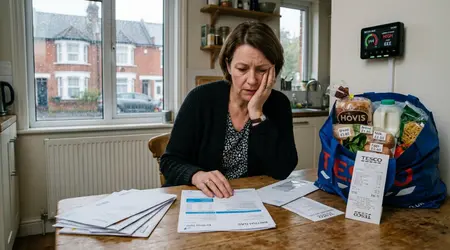
If energy is the catalyst, food is where the impact of the price surge is most visible. British supermarkets are operating in an environment of extreme logistical complexity.
Last year’s unpredictable weather patterns across Southern Europe primary sources for the UK’s fresh produce led to lower yields.
When supply drops, prices inevitably rise. However, the 2026 scenario is further complicated by new post-Brexit border operating models that have finally reached full implementation, adding administrative costs to every shipment.
Labour shortages in the agricultural sector also persist. Despite technological advancements in automated harvesting, the seasonal worker gap remains a thorn in the side of British farmers.
Higher wages offered to attract domestic staff are a positive for the workers but contribute to the “wage-price spiral” that the Bank of England watches so closely.
When you combine higher farm-gate prices with increased fuel costs for delivery fleets, the situation becomes an inescapable reality for the weekly shop.
The psychological impact of these rises cannot be understated. Many households had finally begun to rebuild their rainy-day funds, only to find that the cost of basic staples bread, milk, and eggs is climbing at a rate unseen for eighteen months.
This creates a feedback loop where consumers anticipate further rises, sometimes altering their spending habits in ways that ironically fuel further demand in specific sectors.
It is a delicate time for the UK consumer, requiring both resilience and a very keen eye for budgeting.
The Bank of England’s High-Wire Act
The Monetary Policy Committee (MPC) faces a delicate balancing act as it reacts to the UK inflation rebound 2026.
To combat inflation, the instinctual move is to maintain or raise interest rates to dampen demand. However, with mortgage holders already stretched and the housing market showing signs of stagnation, aggressive hikes could trigger a recessionary dip.
Official data from the Bank of England suggests that while headline inflation has risen, core inflation is rising at a slightly slower pace, providing a glimmer of hope.
This distinction is vital for anyone managing debt or looking to save. The central bank’s communication has shifted toward “higher for longer” rather than “higher and higher.”
For the individual, this means that while the era of 1% mortgages is long gone, we are likely to see a plateauing of rates.
This serves as a reminder that the “Great Moderation” of the early 21st century was perhaps an anomaly, and we are returning to a more traditional, volatile economic norm where money has a distinct and fluctuating cost.
Investment strategies must also adapt. In a high-inflation environment, cash kept in standard current accounts effectively loses value every day.
Many Britons are now looking toward National Savings and Investments (NS&I) or fixed-term ISAs to protect their capital.
However, it is essential to consult with a qualified financial advisor before making significant shifts in your portfolio, as the interplay between interest rates and inflation can be counterintuitive for the uninitiated.
Also read: UK Households Cut Spending at Fastest Pace in Years — Financial Strategies for Tight Budgets
Strategic Financial Management in Volatile Times
In the face of these rising costs, passive financial management is no longer an option. One of the most effective ways to combat rising costs is through active switching and loyalty optimisation.
While the gap between energy providers has narrowed, the insurance market has seen massive premiums. Using the mid-year point to audit all recurring subscriptions and contracts can yield significant annual savings that offset the rise in food costs.
Furthermore, it is worth considering the impact of “shrinkflation.” This is a tactic where manufacturers reduce product size while maintaining the price to hide rising costs.
To navigate this during the UK inflation rebound 2026, consumers should look at the price per unit rather than the shelf price.
This level of granular attention to detail is what separates a resilient household budget from one that falls into deficit during periods of high inflation.
We are also seeing a shift in consumer behaviour toward “own-brand” dominance. The stigma once associated with budget ranges has largely vanished, replaced by a pragmatism that is essential for modern British life.
Retailers are responding by expanding these ranges, but even these are not immune to the pressures of rising raw material costs.
It is a cat-and-mouse game between the consumer’s wallet and the retailer’s margin, where information is the most valuable currency.
Read more: Later-Life Lending Surge: Why Over-55s Are Borrowing More and What It Means for Retirement Planning
Key Economic Indicators: 2025 vs. 2026
The following table outlines the shifts in key sectors that have contributed to the current economic climate.
These figures represent the shifting sands of the UK economy and the pressures facing both the public and private sectors.
| Category | 2025 Average (Actual) | 2026 Q2 Forecast | Primary Driver |
| Headline CPI | 2.1% | 4.2% | Energy & Import Costs |
| Food & Non-Alcoholic Bev | 3.5% | 6.8% | Supply Chain & Labour |
| Electricity & Gas | -2.0% | +12.5% | Global Wholesale Gas |
| Base Interest Rate | 4.0% | 4.75% | MPC Inflation Targeting |
The Role of Government Policy and GOV.UK Resources
The government’s response to the current crisis has been targeted rather than universal. Unlike the broad energy subsidies of previous years, support is now focused on Pension Credit recipients and those on means-tested benefits.
For the “squeezed middle,” the primary relief comes in the form of frozen fuel duties and adjustments to National Insurance thresholds.
It is essential to stay updated via GOV.UK to ensure you are claiming any tax reliefs or grants you may be eligible for.
Expertise in navigating these systems is crucial. For instance, many are unaware of the “Help to Save” scheme, which offers a 50p bonus for every £1 saved for those on lower incomes.
This is a vital tool when the UK inflation rebound 2026 makes saving feel nearly impossible for many.
Consultations with an independent financial adviser (IFA) are recommended for those with significant assets, as inflation erodes the real value of cash savings, making ISA allocations and diversified investments more critical than ever before.
Beyond direct financial aid, there is a growing emphasis on energy efficiency. The government has increased the visibility of the Boiler Upgrade Scheme and insulation grants.
While these require an initial mental or financial investment, they are the only long-term defense against a volatile energy market.
Reducing the “base load” of a home’s energy consumption is the most effective way to insulate a family from the whims of international gas prices and the resulting inflationary pressures.
Long-term Outlook: Is This the New Normal?
As we look toward the end of the year, the trajectory of the UK’s economy will depend heavily on international stability.
If trade routes remain secure and the transition to domestic renewable energy accelerates, we may see a cooling by 2027.
However, the structural reality of higher labour costs and climate-impacted agriculture suggests that the days of ultra-low food inflation are likely behind us for the foreseeable future.
The current situation is a signal that the British economy is undergoing a “re-pricing.”
We are moving from a consumption-led model based on cheap imports to one that must account for the true cost of carbon and resilient supply chains.
While painful in the short term, this shift encourages efficiency and innovation.
For the savvy Briton, staying informed through reputable sources like the Financial Times or the Office for National Statistics (ONS) is the first step in building a robust financial future.
It is also worth noting the impact of the “Silver Economy.” As the UK’s population ages, the spending patterns of retirees who often have different inflationary exposures than working-age families are becoming more influential.
This demographic shift means that inflation in healthcare and leisure services may remain higher for longer, even if energy and food eventually stabilise.
Diversifying one’s understanding of inflation is just as important as diversifying a bank account.
Adapting to the New Economic Reality
In summary, the UK inflation rebound 2026 is not an isolated event but a symptom of a world in flux. By understanding the specific pressures on food and energy, you can tailor your household spending to weather the storm.
It requires a move away from complacency and toward a more proactive, informed approach to personal finance.
The data suggests that while the peak may pass, the baseline has shifted upward, necessitating a permanent change in how we view value.
The road ahead will require patience and a disciplined approach to spending. Remember, financial decisions made during high-inflation periods have long-lasting effects.
Avoiding high-interest consumer debt and prioritising essential spending are the cornerstones of 2026 financial literacy.
By staying engaged with official resources and seeking professional advice when necessary, you can ensure that your household remains resilient despite the economic headwinds currently blowing across the British Isles.
Frequently Asked Questions (FAQ)
1. Why is the UK inflation rebound 2026 happening now?
The rebound is caused by a “perfect storm” of rising wholesale gas prices, increased import costs due to new border checks, and persistent labour shortages in the UK food production sector.
These factors have converged to end the period of low inflation seen in 2025.
2. Will interest rates keep rising throughout the rest of the year?
While the Bank of England is expected to maintain a restrictive stance, most analysts predict rates will plateau rather than continue to climb sharply. The MPC is wary of stifling growth while trying to curb the price rises.
3. How can I protect my savings from the effects of inflation?
In an inflationary environment, cash loses purchasing power.
Consider high-interest ISA accounts, or consult a professional about diversifying into assets that historically keep pace with inflation, such as certain equities or index-linked bonds.
4. Are there any government grants to help with energy costs in 2026?
Support is currently more targeted than in previous years.
You should check GOV.UK for the latest on the Warm Home Discount and various energy efficiency grants which can help reduce long-term bills through better insulation or heating systems.
5. Is “shrinkflation” legal under UK trade standards?
Yes, as long as the weight and volume listed on the packaging are accurate.
It is a common strategy for brands to manage their own rising costs without changing the “headline” price on the shelf, making it vital for consumers to check the price per kilo or litre.
