
Council Tax band rebate: how to claim the new £100 energy payment
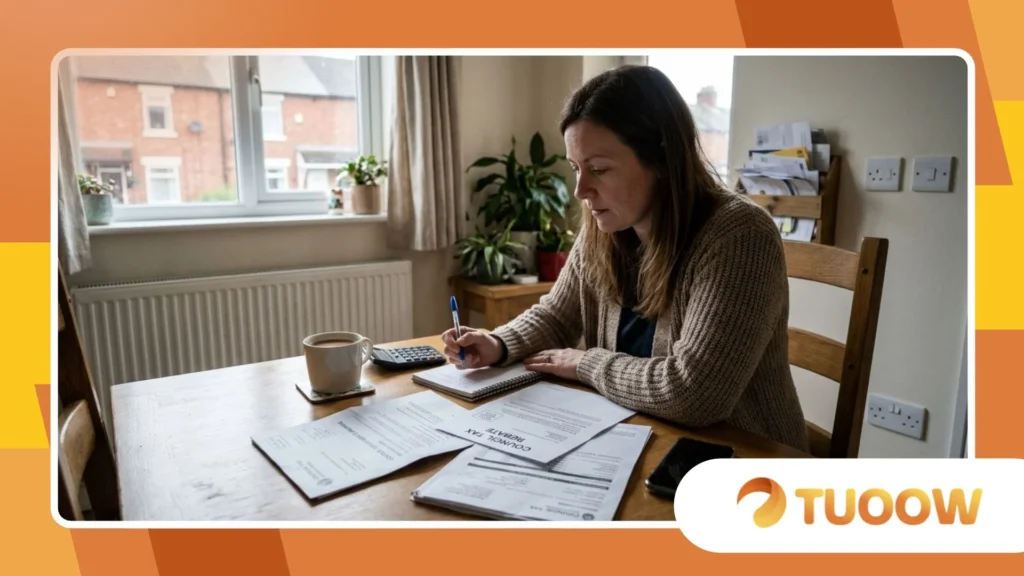
Rising household utility costs continue to put immense pressure on domestic budgets across the United Kingdom.
When winter approaches or standing charges climb, even a modest financial buffer can prevent a household from falling into arrears.
For millions of residents, the Council Tax band rebate represents a crucial lifeline designed to offset seasonal heating bills without requiring complex means-tested applications.
Understanding how local authorities administer these schemes is essential if you want to secure your entitlement without administrative delays.
While previous national initiatives distributed £150 to properties in Bands A to D, newer localised and devolved energy support packages frequently operate on a £100 tier, targeting specific valuation bands or vulnerable households.
Navigating the bureaucracy of local government finance requires clarity on eligibility thresholds, payment mechanisms, and alternative application routes.
- Eligibility criteria across Council Tax valuation bands and devolved nations
- Automatic payment rules for households paying via Direct Debit
- Manual application steps for non-Direct Debit payers and discretionary funds
- Comparative breakdown of UK local authority energy rebate structures
- Common administrative pitfalls, scam warnings, and appeal procedures
- Frequently asked questions regarding residency, student exemptions, and joint tenancies
Understanding the £100 Energy Support Mechanism
To claim your entitlement efficiently, you must first understand how central government grants translate into local authority payouts.
Unlike standard benefits administered centrally by the Department for Work and Pensions (DWP), energy rebates linked to property valuation are delivered by your local billing authority such as your district, borough, or unitary council in England, or your local council in Scotland and Wales.
When HM Treasury or a devolved administration allocates funding for household energy relief, it relies on the existing Council Tax register because that database provides the fastest way to reach millions of homes simultaneously.
However, this administrative convenience comes with strict cut-off dates and rigid definitions of liable persons.
If your name is not officially listed on the council’s database as the liable taxpayer on the qualifying date, the system will bypass your address automatically.
In practical terms, a Council Tax band rebate is not a discount deducted from your annual municipal bill.
Instead, it is a direct cash transfer paid into a nominated bank account to help cover rising gas and electricity tariffs.
This distinction matters significantly for household budgeting, as your monthly Council Tax instalments remain unchanged unless you separately qualify for a Council Tax Reduction or Single Person Discount.
++ Universal Credit in 2026: What the Latest Changes Mean for Claimants
Why Valuation Bands Determine Eligibility
The British property taxation system categorises domestic dwellings into valuation bands based on historical property values 1 April 1991 in England and Scotland, and 1 April 2003 in Wales.
Policymakers use these bands as a rough proxy for household wealth and energy efficiency.
Properties in Bands A to D typically encompass smaller flats, terraced houses, and modest semi-detached homes, which statistically house lower-to-middle-income families.
Critics and housing charities, including Citizens Advice, have frequently pointed out the flaws in this methodology.
A cash-poor pensioner living in a poorly insulated, draughty Victorian house in Band E might face substantially higher heating bills than a high-earning professional living in a modern, well-insulated Band C apartment.
To mitigate this inequity, central guidelines instruct councils to hold back a portion of their funding for a Discretionary Fund, ensuring that residents in higher bands who face genuine financial hardship can still access the £100 support.
Checking Your Property Band and Official Eligibility Criteria
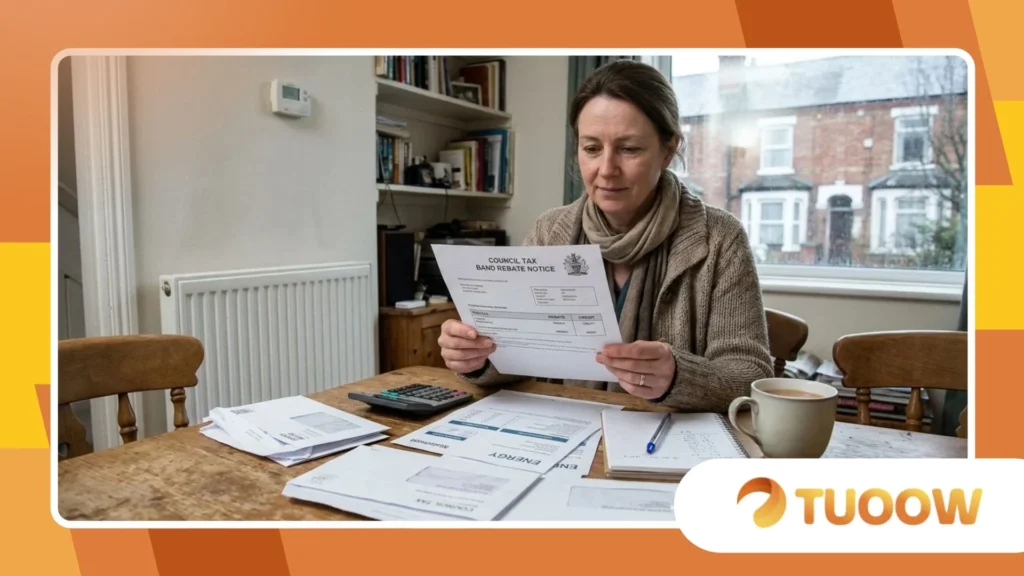
Before submitting any paperwork or contacting your local authority’s revenue team, you must verify your property’s official valuation band.
Do not rely on estimates from property portals or assumptions based on your neighbour’s house, as extensions or historical appeals can alter individual property classifications.
Residents in England and Wales can confirm their exact band instantly via the Valuation Office Agency (VOA) portal on GOV.UK.
If you live in Scotland, you must check the Scottish Assessors Association (SAA) register instead.
Once you have confirmed your band, cross-reference your household circumstances against the core qualifying conditions required by local billing authorities.
| Eligibility Factor | Standard Core Scheme (£100) | Discretionary Support Scheme (£100) |
| Council Tax Band | Typically Bands A to D (varies by local/devolved scheme) | Bands E to H (or non-liable residents in Bands A–D) |
| Occupancy Status | Must be your sole or main residence on the qualifying date | Must be your sole or main residence; second homes excluded |
| Liability Status | Named as the liable Council Tax payer on the bill | Includes tenants where landlord pays Council Tax directly |
| Income / Benefits | Non-means-tested; income and savings are not assessed | Often requires receipt of Universal Credit, Pension Credit, or low income |
| Payment Method | Automatic for Direct Debit payers; manual claim for others | Always requires a manual application with supporting evidence |
Special Exemptions and Student Households
A frequent source of confusion arises when a property is occupied entirely by full-time students or individuals with severe mental impairment.
Under UK law, all-student households are exempt from paying Council Tax, meaning their annual bill shows a zero balance.
Despite paying nothing towards local services, these households still pay commercial energy bills and are legally entitled to the £100 energy payment.
Similarly, households receiving a 100% Council Tax Reduction (formerly Council Tax Benefit) remain fully eligible for the rebate.
Because these residents do not make monthly payments, the council will not hold active Direct Debit details for them.
Consequently, exempt households and full-benefit claimants must follow the manual claim route outlined below rather than waiting for an automated bank transfer.
Also read: Blue Badge Scheme: Who Can Apply and What Benefits It Offers
Step-by-Step Guide: How to Claim Your £100 Payment
The exact mechanism for receiving your funds depends entirely on how you settle your regular municipal tax bill.
Local authorities divide residents into two distinct administrative cohorts to manage fraud prevention and data verification.
Automatic Payouts via Direct Debit
If you already pay your Council Tax by Direct Debit, you generally do not need to take any action.
Your local council holds your sort code and account number on file, allowing their finance department to process a BACS transfer directly into your bank account once they have verified that your bank details match the name of the liable person on the bill.
However, automated systems frequently stall when minor discrepancies occur.
For instance, if the Council Tax account is in the name of “Mrs J. Smith”, but the Direct Debit comes from a joint account held solely in the name of “Mr A. Smith”, the council’s anti-fraud software will flag the mismatch.
In this scenario, the automatic payment will be suspended, and the council will write to you requesting manual verification before releasing the £100.
Manual Applications for Non-Direct Debit Payers
If you pay your bill via standing order, online banking transfer, telephone, or cash at a PayPoint outlet, your council does not possess your bank details.
You will receive an official invitation letter containing a unique security access code or reference number.
To complete your claim, visit your specific local council’s official website always ensuring the web address ends in .gov.uk.
Navigate to the Council Tax or Cost of Living support hub and enter your unique reference code alongside your Council Tax account number.
You will be asked to upload or enter your bank sort code and account number.
Some authorities also require a recent bank statement or utility bill to satisfy Know Your Customer (KYC) anti-fraud checks mandated by the Department for Levelling Up, Housing and Communities (DLUHC).
Applying for the Discretionary Fund
If your property sits in Bands E to H, or if you rent a room in a House in Multiple Occupation (HMO) where the landlord pays the Council Tax, you will not qualify under the primary automatic scheme.
Instead, you must apply through your council’s Discretionary Energy Rebate scheme.
Because discretionary budgets are finite and capped per local authority, speed is critical.
Councils set their own local criteria for these funds, typically prioritising households receiving Universal Credit, Guarantee Pension Credit, Housing Benefit, or Working Tax Credit.
You will need to complete an online financial assessment form and provide digital copies of benefit award letters and recent bank statements showing your household income and expenditure.
Read more: Winter Fuel Payment: What Pensioners Can Expect Ahead of the Colder Months
Practical Scenarios: Navigating Complex Household Setups
Real-world living arrangements rarely fit neatly into standard local government databases.
Understanding how councils resolve edge cases can save you weeks of frustrating phone calls to busy municipal helplines.
Consider the case of David and Priya, a couple renting a two-bedroom flat in Band C in Manchester.
They moved into the property two weeks before the scheme’s qualifying date, but because of delays in updating their tenancy records, the council still had the previous tenant listed on the system.
When the initial payout wave occurred, David and Priya received nothing.
To resolve this, they had to submit a copy of their signed Assured Shorthold Tenancy (AST) agreement to the council’s revenue team, proving they were the resident liable persons on the qualifying date.
Once the council backdated their liability, they became eligible to submit a manual claim.
Another common scenario involves a House in Multiple Occupation (HMO), such as four young professionals sharing a terraced house in Bristol where the landlord is legally liable for the Council Tax.
Under strict statutory rules, the landlord cannot claim the Council Tax band rebate because the property is not the landlord’s sole or main residence.
Meanwhile, the tenants are not listed as the liable taxpayers. In this situation, the tenants must apply jointly or individually to the council’s Discretionary Fund, submitting their tenancy agreements and proof of their direct energy bill payments to demonstrate that they bear the financial burden of heating the home.
The Policy Flaws of Band-Based Energy Relief
While distributing financial aid through the Council Tax system allows HM Treasury to deploy millions of pounds within weeks, policy experts and economists including researchers at the Institute for Fiscal Studies (IFS) have highlighted significant structural flaws in this approach.
First, relying on 1991 property valuations creates stark geographical inequalities.
A modest three-bedroom semi-detached house in a northern town might sit comfortably in Band B, qualifying automatically for the £100 energy payment.
Conversely, a cramped, poorly insulated one-bedroom flat in Inner London might fall into Band E simply due to historical London property prices, excluding a low-income tenant from automatic help.
Second, the administrative burden placed on local authorities often delays vital support.
Councils must divert revenue officers away from standard billing duties to manually verify tens of thousands of non-Direct Debit claims and assess discretionary applications.
For vulnerable, digitally excluded pensioners who lack internet access or smartphones, navigating online verification portals can prove insurmountable without intervention from family members or local charities.
Avoiding Scams and Protecting Your Personal Data
Whenever central or local government announces a new cash rebate, fraudulent actors rapidly deploy phishing campaigns designed to harvest bank details.
Criminals routinely send convincing text messages (smishing) or emails claiming to be from “GOV.UK”, “Ofgem”, or your local council, urging you to click a link to claim your £100 energy rebate.
Remember one golden rule: a genuine local council will never ask for your bank details via text message, WhatsApp, or an unsolicited phone call.
Official invitations for non-Direct Debit payers arrive via traditional post on headed council stationery, directing you to type your council’s official .gov.uk web address directly into your browser.
If you receive a suspicious text message claiming you are owed a Council Tax band rebate, do not click any embedded links.
Forward the text message free of charge to 7726 (which spells SPAM on your phone keypad) to report it to your mobile network provider, and forward suspicious emails to [email protected], operated by the National Cyber Security Centre (NCSC).
What to Do If Your Application Is Delayed or Rejected
If you believe you meet all the qualifying criteria for the £100 payment but have not received your funds within the timeframe published on your council’s website, follow a structured escalation process.
- Check your Council Tax online portal: Many authorities display the status of your rebate application directly within your online account dashboard, indicating whether a payment has been issued or if further identity verification is pending.
- Verify your bank statements carefully: Payments often appear on bank statements under abbreviated municipal acronyms (e.g., “LCC GEN PAY” or “MBC REBATE”) rather than explicitly stating “Energy Payment”.
- Submit a formal administrative review: If your discretionary application is rejected, you have the right to request a review by a senior revenue officer. Clearly outline any exceptional financial circumstances, such as high medical electricity usage for home dialysis or oxygen concentrators, supported by medical evidence.
- Contact the Local Government and Social Care Ombudsman (LGSCO): If your council fails to follow its own published policy or causes severe administrative delay without justification, you can escalate a formal complaint to the Ombudsman after exhausting the council’s internal complaints procedure.
Financial and local taxation policies vary across England, Scotland, Wales, and Northern Ireland. Always verify specific scheme deadlines and eligibility rules directly with your local billing authority or consult an accredited debt and benefits adviser at Citizens Advice if you are experiencing severe financial hardship.
Securing Your Household Entitlement Without Delay
Claiming your £100 energy payment comes down to knowing how your local authority holds your records.
If you pay your municipal bill by Direct Debit and live in an eligible band, your focus should simply be checking your bank statements and ensuring the named account holder matches your Council Tax bill.
If you pay by other means, live in an exempt student property, or occupy a higher-banded home while struggling with energy costs, proactive engagement with your council’s .gov.uk portal is essential before discretionary funds run dry.
Take ten minutes today to verify your property band on GOV.UK, check your latest Council Tax statement for your account reference number, and confirm whether your payment method requires a manual claim.
Acting promptly ensures you capture every pound of support available to keep your home warm and your household finances stable.
Frequently Asked Questions (FAQ)
Do I have to pay the £100 energy rebate back?
No. The £100 payment is a non-repayable government grant designed to help households manage rising energy costs. It is not a loan, and it will not be added to next year’s Council Tax bill.
Will receiving this payment affect my Universal Credit or Pension Credit?
No. Under Department for Work and Pensions (DWP) regulations, local authority energy rebates and discretionary household support payments are completely disregarded when calculating entitlement to means-tested benefits, including Universal Credit, Pension Credit, and Housing Benefit.
What happens if I moved house around the qualifying date?
Eligibility is strictly tied to your sole or main residence on the specific qualifying date set by the scheme. You can only claim one £100 payment per household.
If you moved after the qualifying date, you should claim through the local council responsible for your previous address, provided you were the liable taxpayer there on that exact date.
Can I still get the £100 if I am in Council Tax arrears?
Yes. Local authorities are instructed by central government not to automatically offset the energy rebate against existing Council Tax arrears without your explicit consent.
The payment must be made directly to you so it can be used for household energy bills, though some councils may offer you the option to credit it to your tax account if you prefer.
I live in a park home or residential boat and do not pay Council Tax directly. Can I claim?
Yes. Residents living in caravans, park homes, or houseboats where the site owner pays the Council Tax or those living off-grid without a direct domestic electricity meter are eligible to apply through their local council’s Discretionary Fund, provided they can show proof of residency and energy expenditure.
