
Austerity or Adjustment? What the UK Government’s Tax Increases in Late 2025 Mean for Households in 2026

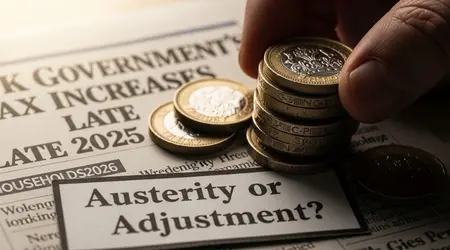
Austerity or Adjustment is the question echoing through British households as the 2026 fiscal year begins to reshape family budgets.
Following the decisive Autumn Budget of late 2025, the UK government has introduced a series of tax hikes that are now hitting bank accounts.
These measures represent a significant pivot in fiscal policy, aimed at repairing public services while managing a record-high national debt.
For many, the distinction between a necessary “adjustment” and a return to “austerity” feels purely academic as disposable incomes face renewed pressure.
What are the Major Tax Changes for 2026?
The current landscape of Austerity or Adjustment is defined by a 2 percentage point increase in dividend tax rates starting this April.
Basic rate taxpayers now pay 10.75%, while higher rate earners have seen their liability climb to a steep 35.75%.
Additionally, the continued freeze on personal income tax thresholds is pushing thousands of workers into higher brackets through “bracket creep.”
This silent tax increase effectively reduces the take-home pay of middle-income earners as their nominal wages rise with inflation.
Why is Dividend Tax Rising for Small Investors?
The government argue that the dividend tax hike ensures those with investment income contribute fairly alongside traditional employees.
For small business owners who pay themselves in dividends, this change represents a direct hit to their annual net profit.
By raising the basic rate from 8.75% to 10.75%, the Treasury aims to generate billions for the NHS.
This shift forces many to reconsider their investment strategies outside of tax-sheltered wrappers like ISAs or personal pensions.
++ UK Private Sector Enters 2026 in Downturn: Analysis of Latest CBI Economic Indicators
How Does Bracket Creep Affect Your Monthly Pay?
Freezing the personal allowance at £12,570 until 2028 means that even modest pay rises result in a larger proportion of income going to HMRC.
This phenomenon is a cornerstone of the current Austerity or Adjustment debate, as it functions as a hidden levy.
As wages grow to match the 2026 cost of living, more individuals find themselves crossing the £50,270 threshold into the 40% tax band.
For the average household, this “fiscal drag” can feel like a pay cut despite receiving a workplace raise.
Also read: What the Bank of England’s December Rate Cut Means for the UK Economy in 2026
What Changes are Hitting the Property Market?
Landlords and second-home owners are facing a tougher environment with the introduction of separate, higher tax rates for property income.
From April 2026, the complexity of filing returns increases alongside the total tax bill for those with rental portfolios.
These property-specific rates are designed to cool the buy-to-let market and potentially free up housing stock for first-time buyers.
However, critics argue this “adjustment” will lead to higher rents as landlords pass on their increased tax costs.
Why is Capital Gains Tax Increasing for Business Sales?
The rate for Business Asset Disposal Relief (BADR) has officially climbed to 18% from its previous 14% level this year.
Entrepreneurs selling their companies now retain less of their hard-earned gains, impacting the incentive for long-term business investment.
This move aims to align capital taxes more closely with income tax rates to prevent “tax engineering” by the wealthy.
Whether this fosters a fairer society or stifles British innovation remains a central point of political contention in 2026.
How Does This Plan Impact Typical British Families?
The debate over Austerity or Adjustment reaches the kitchen table when families calculate their rising Council Tax and utility bills.
While some benefit from the removal of the two-child benefit limit, others find their “Winter Fuel Payment” newly taxed.
Research from the Institute for Fiscal Studies (IFS) confirms that the tax take is set to reach a record 37.4% of national income.
This historic high reflects the government’s aggressive attempt to fill the “fiscal black hole” inherited from previous years.
What is the Impact on Higher Earners and “Non-Doms”?
The abolition of the non-domicile tax regime in April 2026 marks the end of an era for wealthy international residents.
The new residence-based system ensures that all UK residents pay tax on their global income after four years of residency.
This radical “adjustment” aims to raise significant revenue from the world’s wealthiest individuals living in London and other hubs.
Proponents call it a victory for fairness; detractors fear a “wealth flight” to more competitive tax jurisdictions.
Why are Inheritance Tax Thresholds Still Frozen?
Inheritance tax (IHT) remains a sensitive topic as the £325,000 nil-rate band is held steady despite rising property values.
This freeze, coupled with new caps on agricultural and business reliefs, brings more family estates into the tax net.
Couples can still pass on up to £1 million including the residence nil-rate band, but larger estates face a 40% bite.
For many families, this feels like an Austerity or Adjustment measure that targets the generational wealth of the middle class.
What Statistic Defines the Current Economic Mood?
The Office for Budget Responsibility (OBR) projects that real household disposable income will remain stagnant through most of 2026.
This lack of growth, paired with a rising tax burden, creates a “cost of living plateau” that feels precarious.
While inflation has stabilized, the “compounding effect” of previous price hikes and new taxes keeps consumer confidence relatively low.
It is a period of “fiscal sobriety” that requires careful financial planning from every UK household.
How is the UK Economy Like a “Repairing Bridge”?
Managing the national budget in 2026 is like repairing a bridge while the traffic is still moving across it.
You must strengthen the foundations (public services) without adding so much weight (taxes) that the traffic (spending) stops entirely.
The government is trying to find the “structural sweet spot” where the bridge holds firm without causing a gridlock.
If they add too much weight too quickly, the economic recovery could stall before it truly begins.
What are the Long-term Goals of These Tax Hikes?
The narrative of Austerity or Adjustment is often used by the Treasury to justify the short-term pain for long-term gain.
By stabilizing the debt-to-GDP ratio, the government hopes to lower interest rates and encourage private sector business investment.
Focusing on “Green Growth” and infrastructure, the 2026 plan allocates billions to regional development and high-speed rail projects.
The goal is a “high-wage, high-skill” economy that eventually outgrows the need for high taxation levels.
How Does the New 40% First-Year Allowance Help Businesses?
To offset higher taxes, a new 40% first-year allowance for plant and machinery expenditure was introduced in January 2026.
This “adjustment” encourages firms to modernize their equipment and boost productivity through immediate tax relief on investments.
This policy seeks to turn the UK into a “workshop of the future” by rewarding companies that reinvest their profits locally.
It is a carrot-and-stick approach: higher headline taxes, but generous rewards for those who build the nation’s capacity.
Why is the Government Cancelling the Fuel Duty Hike?
In a rare move to support motorists, the planned uprating of fuel duty for 2026 was largely cancelled or deferred.
The 5p cut has been extended until late 2026 to prevent a “pump shock” that could reignite inflationary pressures.
This specific decision shows that the Austerity or Adjustment policy is not purely about raising revenue at any cost.
It demonstrates a tactical awareness of the “pain points” for the working population who rely on their vehicles daily.
What Original Example Shows the Impact on a “Typical” Couple?
Take “The Johnsons,” a couple in Manchester; he is a teacher, and she runs a small graphic design consultancy.
The freeze on thresholds means more of his salary is taxed at 20%, while her dividend income tax has increased.
They find themselves with £150 less per month than they had in 2024, despite receiving a modest 3% annual pay rise.
This “middle-income squeeze” is the most common manifestation of the 2026 tax plan across the United Kingdom.
Can the UK Maintain its Global Competitiveness?
Despite the higher tax burden, the UK’s total tax take remains lower than many Western European neighbors like France or Germany.
The government argues that the UK’s legal system and talent pool still make it a “top-tier” destination.
The challenge for 2026 is ensuring that the Austerity or Adjustment measures don’t tip the scales toward a brain drain.
Maintaining a delicate balance between public service funding and a competitive business environment is the ultimate test for the Chancellor.
Comparison of Key UK Tax Rates (2024 vs. 2026)
| Tax Category | 2024 Rate/Level | 2026 Rate/Level | Household Impact |
| Dividend Tax (Basic) | 8.75% | 10.75% | Lower net income for small investors |
| Dividend Tax (Higher) | 33.75% | 35.75% | Significant hit to high-earning portfolios |
| Personal Allowance | £12,570 (Frozen) | £12,570 (Frozen) | “Bracket Creep” reduces real-term pay |
| BADR (Capital Gains) | 10% | 18% | Higher cost for selling a business |
| Stamp Duty Surcharge | 3% | 5% | Higher entry cost for second-home buyers |
| Non-Dom Status | Available | Abolished | Residence-based system for the wealthy |
In conclusion, the Austerity or Adjustment debate of 2026 reveals a nation at a fiscal crossroads, attempting to fund its future through present sacrifice.
While the record tax burden is a bitter pill for many, the government maintains that these “surgical adjustments” are necessary for economic health.
Success will be measured not just by the closing of the deficit, but by whether public services like the NHS actually show visible improvement.
As households tighten their belts, the pressure is on the Treasury to prove that this “adjustment” will lead to a more prosperous Britain.
Do you feel the 2026 tax changes are a fair price to pay for better public services? Share your experience in the comments!
Frequently Asked Questions
Does Austerity or Adjustment mean my Income Tax rate is going up?
The headline rates (20%, 40%, 45%) have not changed. However, because the thresholds are frozen, you may pay more tax if your salary increases a process known as “fiscal drag.”
How does the dividend tax hike affect my Stocks & Shares ISA?
It doesn’t! One of the best ways to navigate the Austerity or Adjustment period is to use ISAs. Any dividends earned within an ISA remain 100% tax-free, regardless of the new 2026 rates.
I’m a small business owner; can I still use BADR?
Yes, Business Asset Disposal Relief is still available, but the rate has increased to 18%. You can still claim this on the first £1 million of lifetime qualifying gains, provided you meet the eligibility criteria.
Will Council Tax continue to rise in 2026?
Most local authorities are expected to raise Council Tax by the maximum allowed (usually 4.99%) without a referendum. This is a key part of the “adjustment” at the local government level to fund social care.
Is there any good news for savers in the 2026 plan?
The “Starting Rate for Savings” remains at £5,000 for those with low earned income. Additionally, higher interest rates mean your savings could grow faster, although you must watch out for the Personal Savings Allowance limits.
