
Disability benefit assessments: what the new recordings change
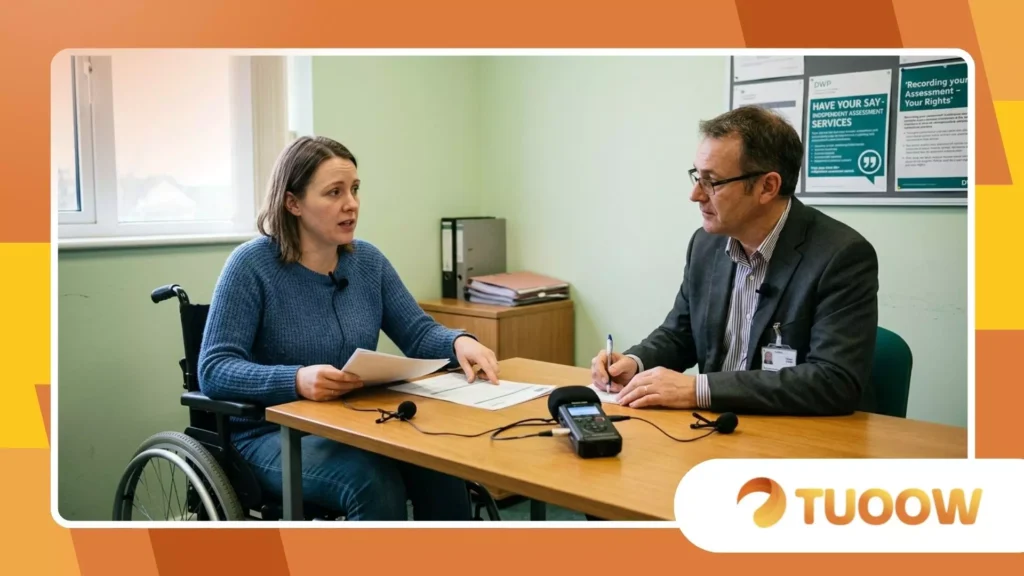
Navigating the financial support system for long-term health conditions or disabilities can often feel like an overwhelming journey.
For hundreds of thousands of claimants across the United Kingdom, attending an evaluation carried out on behalf of the Department for Work and Pensions (DWP) represents a crucial hurdle in securing Personal Independence Payment (PIP), Employment and Support Allowance (ESA), or Universal Credit health elements.
Historically, one of the most significant pain points for claimants has been the discrepancy between what was discussed during an interview and what appeared in the medical report.
However, recent policy updates and technological adjustments surrounding disability benefit assessments have introduced widespread audio recording options for both remote and face-to-face evaluations, fundamentally altering the dynamic between claimants and healthcare professionals.
Understanding these updates is essential for anyone seeking financial help from the government.
Official recording mechanisms ensure that an accurate, unedited verbatim record of the dialogue is maintained, providing a clear evidentiary safety net during reconsideration requests or independent tribunal appeals.
By taking advantage of audio recording facilities, applicants can significantly reduce the anxiety associated with misquotations or omitted medical evidence.
This guide delves into how the latest assessment recording protocols operate, examining their legal basis, practical application, advantages, and real-world implications for disabled individuals across the UK.
Key Sections in This Guide
- The Evolution of Assessment Recording Policies: How legislative frameworks and DWP directives moved from strict restrictions to accessible audio recording options.
- How Audio Recordings Alter the Assessment Landscape: Safeguarding claimant accuracy, increasing assessor accountability, and reducing administrative errors.
- Comparing Recording Methods Across Assessment Types: A detailed comparative breakdown of telephone, video, and face-to-face evaluation rules.
- Practical Step-by-Step Guide to Requesting Your Assessment Audio: Practical instructions on setting up official recordings and adhering to legal requirements.
- Comparative Summary of Recording Protocols: A structured overview of formats, rules, and procedures for easy reference.
- Navigating Challenges and Appeals: How recorded evidence transforms Mandatory Reconsiderations and Appeals Tribunals.
- frequently Asked Questions: Clear answers to common queries regarding recording equipment, rights, and privacy.
- Concluding Thoughts: Final expert recommendations for navigating your benefit evaluation with confidence.
The Evolution of Assessment Recording Policies
For years, disabled individuals and advocacy organisations such as Citizens Advice, Mind, and Scope voiced deep concerns regarding the consistency and accuracy of reports produced after disability benefit assessments.
Prior to recent systemic changes, individuals wishing to record their personal evaluation faced strict regulatory obstacles.
Claimants were often required to provide two identical dual-tape or dual-CD recording devices that met precise technical specifications, while personal smartphones or digital dictaphones were strictly prohibited.
Failure to adhere strictly to these onerous rules frequently resulted in the immediate termination of the appointment, with the DWP occasionally interpreting the refusal to proceed unrecorded as a failure to attend without good cause.
Recognising that inaccurate assessment reports were driving high volumes of decision reviews and tribunal appeals where over 70% of initial DWP decisions are routinely overturned by independent judges the DWP began modernising its approach.
The expansion of remote evaluations during recent years accelerated the rollout of integrated telephone and digital recording capabilities.
Today, assessment providers such as Capita, Maximus (Health Assessment Advisory Service), and Serco are contractually obligated to offer audio recording options to claimants who request them in advance for PIP, ESA, and Universal Credit Work Capability Assessments (WCA).
This policy evolution represents a major shift towards transparency and trust within the UK social security system.
Official DWP guidance explicitly confirms that claimants have the right to request an audio recording of their consultation without having to supply specialized equipment themselves for phone or video appointments.
Where face-to-face appointments take place, providers are gradually integrating automated digital recording equipment into examination centres, ensuring that every claimant who desires an audio safety net can obtain one without incurring prohibitive personal costs.
How Audio Recordings Alter the Assessment Landscape
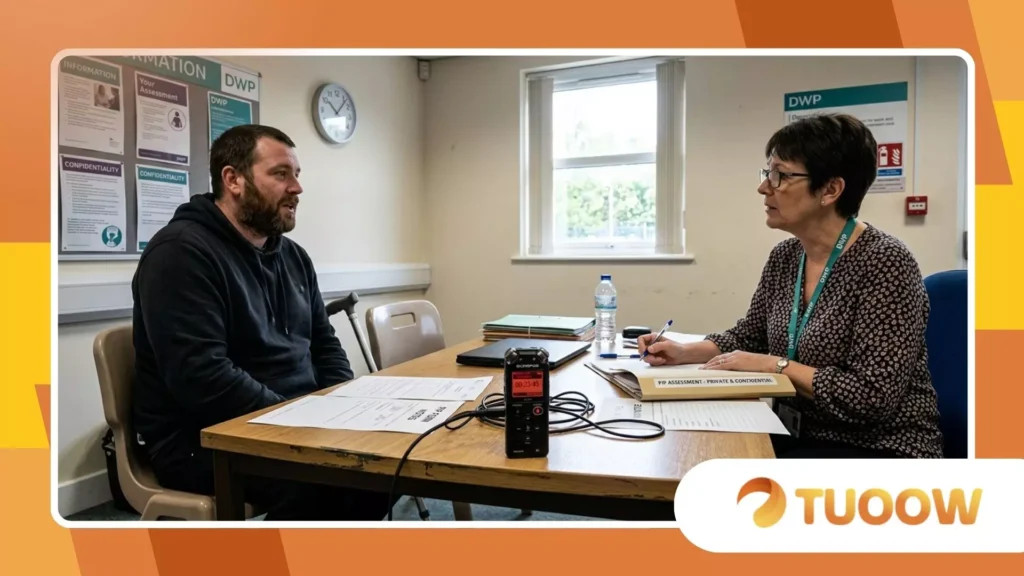
The introduction of universal recording access changes the fundamental power dynamic of disability benefit assessments.
For decades, the assessment report (such as the PA4 form used in PIP claims) served as the primary, often uncontested narrative used by DWP decision-makers.
When a claimant argued that an assessor had misquoted their daily living challenges or ignored physical pain levels, tribunal panels had to weigh the written word of an independent medical professional against the retrospective recollection of the applicant.
An audio recording provides an objective, immutable baseline that eliminates subjective ambiguity.
From an administrative perspective, recorded assessments promote greater rigor among healthcare assessors including registered nurses, occupational therapists, and physiotherapists.
Knowing that an audio file can be reviewed during quality audits or tribunal proceedings encourages strict adherence to official DWP clinical guidelines.
Assessors are more likely to probe deeper into fluctuating conditions, document detailed descriptors accurately, and avoid making sweeping generalizations based on brief observations during the session.
Moreover, the psychological benefit for claimants cannot be understated. Attending a medical evaluation frequently induces severe anxiety, particularly for individuals living with mental health conditions, neurodivergence, or cognitive impairments.
Knowing that every spoken response is accurately captured allows claimants to focus entirely on explaining their complex daily challenges without worrying that their words will be misconstrued or omitted.
Should a decision turn out to be unfavorable, the presence of a complete transcript drastically streamlines the task of identifying factual errors during the Mandatory Reconsideration phase.
++ DWP Payment Dates: Benefits Scheduled to Be Paid This Month
Comparing Recording Methods Across Assessment Types
Depending on your specific location, health condition, and provider, your evaluation may take place via telephone, secure video link, or in person at a regional assessment centre. The operational rules governing recordings vary slightly across these mediums:
Telephone Assessments
Telephone evaluations have become the most common format for PIP and WCA reviews. Under current DWP rules, claimants can ask for their telephone conversation to be recorded by notifying the assessment provider ahead of time.
The provider uses an automated, secure digital audio system integrated directly into their communications software.
Once the call ends, the audio file is securely archived in compliance with UK GDPR standards, and a physical CD or secure digital copy can be dispatched directly to the claimant upon request.
Video Assessments
Video appointments use approved web-based video platforms that feature built-in audio recording capabilities.
Similar to telephone evaluations, the audio track is captured directly through the provider’s secure software environment.
It is important to note that assessment providers currently record the audio element of video consultations rather than the full video stream to balance privacy considerations with factual accuracy.
Also read: Blue Badge Scheme: Who Can Apply and What Benefits It Offers
Face-to-Face Assessments
If you are attending an assessment centre in person, you must notify the provider prior to your appointment so they can reserve a room equipped with approved recording devices.
While providers are rolling out standardized digital recording hardware, some locations still utilise dual-media recording equipment (such as dual CDs or tapes).
If you intend to record a face-to-face evaluation using your own equipment, DWP regulations dictate that you must use hardware that produces two simultaneous, identical copies on physical media (such as CDs or audio cassettes) and present one sealed copy to the assessor immediately following the interview.
Recording secretly on a mobile phone remains prohibited under provider terms of engagement and can result in the assessment being halted.
Read more: Winter Fuel Payment: What Pensioners Can Expect Ahead of the Colder Months
Practical Step-by-Step Guide to Requesting Your Assessment Audio
To ensure that your request is processed smoothly and without administrative delays, follow this straightforward protocol when engaging with your designated assessment provider:
- Identify Your Assessment Provider: Check your official appointment letter to confirm whether your assessment is being conducted by Capita, Maximus (HAAS), Serco, or another contracted entity.
- Make Early Contact: Phone or email the provider as soon as you receive your appointment letter. Do not wait until the day before the evaluation, as recording-enabled slots or equipped rooms must be allocated in advance.
- Explicitly Request Audio Recording: Clearly state: “I wish to formally request that my benefit assessment be audio recorded by the provider.” Ensure the customer service agent confirms in writing or via text message that your request has been logged on the system.
- Confirm at the Start of the Session: When the assessor connects via phone, video, or in person, verbally confirm before answering clinical questions: “Can you please confirm that the audio recording is currently active?”
- Request Your Copy Post-Assessment: Following the assessment, contact the provider or the DWP to request a copy of the official recording and the detailed assessor report (e.g., PA4 for PIP or ESA85 for WCA) for your personal records.
Overview of Assessment Recording Rules
To assist you in understanding the different rules, hardware requirements, and processes across assessment types, the following table summarizes key details for disability benefit assessments:
| Assessment Format | Provider Recording Availability | Personal Equipment Allowed? | Request Notice Period | Output Received By Claimant |
| Telephone Call | Available on request via provider system | No (Must use official system unless agreed) | Advance notice recommended (at least 3–5 days) | Physical CD or secure digital audio file |
| Video Link | Available on request (Audio track captured) | No (Prohibited under software terms) | Advance notice required during scheduling | Audio copy dispatched post-assessment |
| Face-to-Face Centre | Available in designated equipped rooms | Yes (Must be dual-media, e.g., dual CD/tape) | Advance notice required to secure equipped room | One sealed physical copy kept by claimant |
Navigating Challenges and Appeals
Even with an audio recording in place, some claimants may still receive a decision that does not accurately reflect the severity of their daily living or mobility limitations.
However, having an audio record fundamentally strengthens your position if you need to challenge the DWP’s outcome through the formal appeals process.
Compare the Recording Against the Assessor’s Report
Once you receive your decision letter, immediately request a full copy of the assessor’s written report from the DWP if you haven’t already.
Listen to your audio recording alongside the written report. Take detailed notes, noting specific timestamps where the written summary contradicts, misrepresents, or omits statement you made during the call.
For example, if the written report states that you can “walk 50 metres without pain,” but your audio recording captures you explicitly telling the assessor that you experience severe pain after 10 metres, mark this exact timestamp.
Submit a Fact-Based Mandatory Reconsideration
When writing your Mandatory Reconsideration request, reference your transcript or timestamps directly.
Instead of making broad assertions, present clear, objective evidence: “At minute 14:25 of the official audio recording, I explained that I cannot cook safely without supervision due to seizures. However, Section 2 of the PA4 report incorrectly states I can prepare meals unassisted.”
DWP decision-makers are far more likely to revise a decision when presented with incontrovertible audio evidence that directly undermines the clinical report’s conclusions.
Presenting Audio Evidence at HM Courts & Tribunals Service (HMCTS)
If your Mandatory Reconsideration is unsuccessful and you proceed to an independent First-tier Tribunal, the audio recording becomes an invaluable asset.
Tribunal panels, chaired by an independent judge alongside a medical expert and a disability specialist, prioritize objective truth.
You can submit your timestamped transcript as part of your written appeal bundle. In many instances, the clear presence of conflicting audio evidence prompts the DWP to review and correct the decision before the tribunal hearing even takes place, saving months of administrative delay.
Concluding Thoughts
The expansion of audio recording options represents one of the most positive, transparent developments in the administration of disability benefit assessments across the United Kingdom.
By providing an indisputable, verbatim record of the evaluation, recordings protect claimants against misrepresentation, enhance assessor accountability, and supply clear, objective evidence for review and appeal procedures.
If you or someone you care for is preparing for an upcoming PIP, ESA, or Work Capability Assessment, making an advance request for an audio recording is one of the most effective steps you can take to safeguard your claim.
Pair this recording with comprehensive supporting evidence from your GP, consultant, or care team, and ensure you retain copies of all correspondence.
If you encounter complex challenges during your claim or appeal, consider seeking free, independent advice from qualified professionals at Citizens Advice, Advice UK, or local disability advocacy organisations to ensure your rights are fully protected throughout the process.
Frequently Asked Questions
Can I secretly record my assessment on my mobile phone?
No. DWP guidance and provider rules strictly prohibit unapproved or secret recordings.
If an assessor discovers that a recording is being made without prior agreement using non-compliant equipment, they have the right to terminate the evaluation immediately.
This may be reported to the DWP as an uncooperative refusal to participate, jeopardising your claim. Always request official recording through established provider channels.
What happens if the provider fails to record the assessment despite my advance request?
If you formally requested a recording in advance and arrived at the assessment only to discover the provider failed to set up the equipment, you have the right to ask for the appointment to be rescheduled without penalty.
The provider must log this as an administrative rescheduling rather than a claimant failure to attend.
Will requesting a recording make the assessor biased against me?
No. Requesting an audio recording is a standard, recognized right within the UK social security framework. Healthcare assessors conduct recorded evaluations daily.
If anything, the presence of a recording ensures that all parties maintain professional standards, follow official descriptors closely, and treat the process with proper rigor.
Is there any financial cost to having my assessment recorded?
No. When the assessment provider records the evaluation using their official software or equipment, the service is completely free of charge.
If you choose to bring your own dual-media recording equipment to a face-to-face session, you will be responsible for purchasing your own compliant devices and physical media (such as blank CDs).
