
Hereditary Peers Exit the House of Lords in 2026: Impact on UK Politics and Legislative Scrutiny

The British constitution is often likened to an ancient country house: full of winding corridors, eccentric extensions, and an occasional draft.
For centuries, one of its most peculiar features has been the presence of hereditary peers individuals who sat and voted on the laws of the land simply by virtue of their birth.
However, as of March 2026, the final scaffolding of this particular wing has been dismantled.
The House of Lords (Hereditary Peers) Bill has received Royal Assent, signifying that Hereditary Peers Exit the House of Lords in 2026 as a formal, functioning block of the legislature.
This shift is more than just a tidy-up of a 21st-century democracy; it represents a fundamental rebalancing of how laws are scrutinised in the United Kingdom.
To understand why this matters, one must look past the ermine robes and gold maces and examine the machinery of the Westminster system.
This article explores the educational nuances of our parliamentary structure and the profound implications of removing the hereditary principle from our law-making process.
Essential Guide: The End of Hereditary Rule
- The Legislative Shift: The House of Lords (Hereditary Peers) Act 2026 officially removes the remaining 92 hereditary seats, finishing the work started by the 1999 reforms.
- The Scrutiny Factor: The House of Lords acts as a ‘revising chamber’, ensuring that legislation passed by the Commons is technically sound and democratically balanced.
- A Modern Second Chamber: The move aims to bring the UK in line with other global democracies, leaving Lesotho as the only other nation with a hereditary legislative element.
- Wider Reform Potential: This exit is seen as a ‘first step’ towards a mandatory retirement age and a more regionally representative upper house.
How the British Parliamentary System Functions
To appreciate the gravity of the 2026 transition, we must first understand the bicameral (two-house) nature of the UK Parliament.
The system relies on a delicate tension between the House of Commons and the House of Lords.
While the Commons is the primary legislative body holding the ‘power of the purse’ and the mandate of the electorate the Lords serves as a vital safety brake.
Its members do not compete for votes, which theoretically allows them to focus on the long-term impact of a bill rather than short-term political gains.
The House of Lords performs three main roles: making laws, investigating public policy through select committees, and holding the government to account.
Most bills begin in the Commons, but they must pass through the Lords for ‘line-by-line’ scrutiny.
Because Hereditary Peers Exit the House of Lords in 2026, the composition of those conducting this scrutiny will now consist entirely of Life Peers those appointed for their professional expertise and the ‘Lords Spiritual’ (Bishops).
Historically, the 92 hereditary peers were a remnant of a ‘temporary compromise’ reached in 1999.
Their removal in 2026 is intended to resolve an internal contradiction: that a modern state can have legislators who are not selected on merit, expertise, or election, but by ancestry.
For the average citizen, this change ensures that the people challenging the government’s plans for the NHS, education, or the economy have reached their positions through a process of appointment based on contribution to public life, rather than a family tree.
++ The Military Gap Year Scheme: Can It Really Boost Recruitment and Youth Engagement in 2026
Why the Removal of Hereditary Peers Matters in 2026
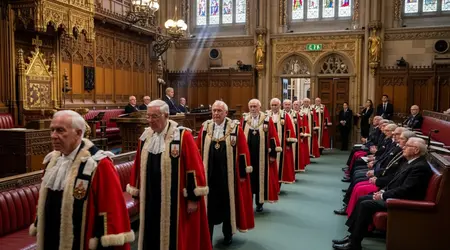
Critics of the reform often argue that hereditary peers provided a level of independence from party patronage.
However, the constitutional reality is that the hereditary principle is increasingly difficult to defend in an age of transparency.
When Hereditary Peers Exit the House of Lords in 2026, it closes a chapter where vacancies in the House were filled through ‘by-elections’ that were often described as farcical where only other hereditary peers could vote or stand for election.
The impact on legislative scrutiny is the most debated aspect of this change. Some experts at the Hansard Society suggest that the Lords might become more assertive.
Without the “undemocratic” baggage of the hereditary element, Life Peers may feel they have a stronger moral mandate to challenge the House of Commons.
This could lead to more frequent ‘ping-pong’ sessions where a bill travels back and forth between the two houses as they struggle to agree on amendments.
Also read: Biggest Overhaul of UK Migration Model in 50 Years
The Impact on Specialist Oversight
On a practical level, the departure of these peers also reduces the size of what is currently the largest upper house in the world (excluding the Chinese National People’s Congress).
A smaller, more focused chamber is arguably better equipped to handle the complexities of modern legislation, such as regulating Artificial Intelligence or navigating post-Brexit regulatory frameworks.
In my analysis, the quality of scrutiny depends less on the source of a peer’s title and more on the capacity of the chamber to provide specialist oversight that the fast-paced Commons often misses.
Furthermore, the reform signals a move toward a “meritocratic” upper house.
By removing the 92 hereditary seats, the government has paved the way for a second chamber that is defined by what its members know, rather than who their ancestors were.
This shift is expected to enhance the credibility of the House of Lords when it engages in its primary function: acting as a check on executive power.
Comparison: The House of Lords Before and After the 2026 Reform
The following table illustrates the structural changes to the upper house following the implementation of the new Act.
| Feature | Pre-2026 House of Lords | Post-2026 House of Lords |
| Hereditary Principle | 92 peers sat by right of birth. | Abolished (except for ceremonial roles). |
| By-Elections | Held to replace deceased hereditary peers. | Permanently abolished. |
| Membership Type | Mix of Hereditary, Life, and Spiritual Peers. | Primarily Life Peers and Bishops. |
| Average Age | Roughly 71 years old. | Potential for change with future retirement caps. |
| Democratic Legitimacy | Frequently criticised for ‘archaic’ elements. | Seen as a step toward a modernised chamber. |
The Human Side of Legislative Scrutiny
It is easy to get lost in the jargon of “Statutory Instruments” and “Royal Assent,” but the work of the Lords has a direct impact on your daily life.
Imagine a scenario where the government introduces a new Crime and Policing Bill. In the House of Commons, the debate might be highly partisan, with MPs focused on headlines.
In the Lords, a former Lord Chief Justice or a retired head of the Metropolitan Police both Life Peers can identify a specific clause that might accidentally infringe on civil liberties.
When Hereditary Peers Exit the House of Lords in 2026, the burden of this detailed work falls entirely on the remaining peers.
This shift places a spotlight on the appointments process overseen by the House of Lords Appointments Commission (HOLAC).
For the public to maintain trust in a non-elected chamber, the experts appointed to it must reflect the diversity of the UK’s nations and regions.
Read more: Brit Awards 2026 Moves to Manchester: Cultural and Economic Impact Outside London
Ensuring Regional and Professional Diversity
My recommendation for those interested in the future of British politics is to watch the ‘Appointments Process’ closely.
Without the hereditary “buffer,” the Prime Minister’s power to appoint peers becomes even more significant.
There is a risk that the chamber could become a “house of patronage” if the vetting process is not strictly independent.
As we have seen in recent years, the legitimacy of the Lords is its most valuable asset; without it, the revising chamber loses its ability to effectively challenge a government with a large majority.
The removal of hereditary peers is not just a deletion; it is a redirection of resources.
The funds and administrative support previously allocated to maintaining the hereditary block can now be channeled into strengthening the committee systems.
This is where the real “heavy lifting” of the Lords happens, and where experts can dig into the fine print of trade deals or health regulations that affect millions of UK residents.
Understanding the “Henry VIII” Powers and the Lords’ Role
One of the most critical functions of the House of Lords is the scrutiny of “secondary legislation” or Statutory Instruments.
These are laws made by Ministers using powers granted to them by an Act of Parliament.
They are often called “Henry VIII powers” because they allow the executive to change laws without the full scrutiny of a new bill.
Because these instruments are often passed with minimal debate in the Commons, the Lords’ Secondary Legislation Scrutiny Committee is often the only line of defence against executive overreach.
The Hereditary Peers Exit the House of Lords in 2026 at a time when the government is increasingly relying on these delegated powers to reshape significant areas of law, such as online safety and environmental standards.
The expertise of the upper house is essential here.
Whether it is a peer with a background in environmental science or a tech industry veteran, their ability to spot a flaw in a complex regulation protects the UK from poorly drafted laws that could have unforeseen economic consequences.
Legal Complexity and the Need for Professional Advice
If you are navigating a legal or financial change affected by new regulations, it is important to remember that the “law” is often a combination of the primary Act and several secondary regulations.
Because of this complexity, consulting with qualified legal professionals remains necessary for specific advice.
The House of Lords serves to ensure that these regulations are as clear and fair as possible before they reach the public.
By refining the chamber’s membership, the 2026 reform aims to make this scrutiny process more robust.
A chamber composed of individuals who have earned their places through career achievement is arguably better positioned to provide the technical “checks and balances” required in an increasingly digital and regulated society.
The transition marks the UK’s commitment to ensuring that no part of the law-making process remains shielded from the standards of 21st-century governance.
A Chamber Fit for the Future: Final Reflections
The 2026 reforms mark a significant milestone in the long history of the British Parliament.
By removing the final hereditary element, the UK has taken a decisive step toward a more professionalised second chamber.
While the departure of the 92 hereditary peers will be mourned by traditionalists, the transition is a necessary adjustment to ensure that legislative scrutiny remains robust and respected in the modern era.
The focus now shifts to what comes next: a mandatory retirement age of 80, a participation requirement to remove ‘inactive’ peers, and the long-term goal of a regionally representative house.
The Hereditary Peers Exit the House of Lords in 2026 is not the end of reform, but the beginning of a new phase.
It is an invitation for the UK to decide what kind of “upper house” it really wants one that balances the expertise of the few with the democratic will of the many.
Frequently Asked Questions
Why did it take so long for hereditary peers to be removed?
The 1999 House of Lords Act was intended to be a two-stage process. The 92 hereditary peers were allowed to stay as a compromise to ensure the first stage of reform passed smoothly.
For 27 years, consecutive governments failed to find the political consensus to finish the “second stage” until the current legislation was enacted in March 2026.
Are all hereditary titles now useless in politics?
The titles themselves (Duke, Earl, Viscount, etc.) still exist as part of the UK’s peerage system and are used in social and ceremonial contexts.
However, they no longer grant an automatic right to sit, vote, or claim allowances in the House of Lords. Only those created as Life Peers can continue to serve as legislators.
Does the King still have a role in the House of Lords?
The King’s role is purely constitutional and ceremonial. He opens each session of Parliament with the King’s Speech and grants Royal Assent to bills, but he does not participate in debates or votes.
The ceremonial roles of the Earl Marshal and Lord Great Chamberlain continue, but their automatic legislative seats are removed.
Will the House of Lords eventually be elected?
This remains a topic of intense debate. While some advocate for a fully elected second chamber, others fear it would lead to legislative deadlock similar to the US Senate.
The current government’s focus is on incremental reform, such as removing hereditary peers and introducing retirement ages, rather than a full move to an elected model.
How can I find out who my local peer is?
Unlike MPs, peers do not represent specific geographic constituencies. You can, however, look up members of the House of Lords on the official UK Parliament website (parliament.uk) to see their areas of expertise, voting records, and registered interests.
This is the most reliable way to understand who is scrutinising the laws that affect you.
