
LCWRA benefit changes 2026: new rules for disability support

For many across the United Kingdom, the arrival of a brown envelope from the Department for Work and Pensions (DWP) brings a specific kind of apprehension.
As the cost of living remains a primary concern for those with long-term health conditions, the stability of the social safety net is paramount.
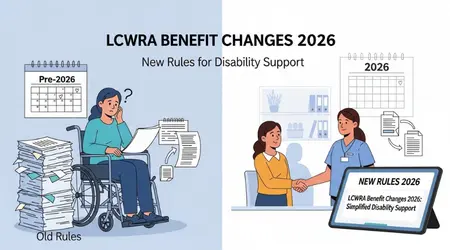
The LCWRA benefit changes 2026 represent a significant structural overhaul of the welfare system, moving away from traditional functional assessments toward a model integrated with the Health Opportunity Framework.
This transition marks the end of the Work Capability Assessment (WCA) as we have known it for over a decade.
The government’s intention, outlined in various briefings on GOV.UK, is to simplify the journey for claimants by reducing the number of medical reviews required to access financial support.
However, for those currently receiving the Limited Capability for Work and Work-Related Activity (LCWRA) element of Universal Credit, understanding how these new rules apply to their specific circumstances is essential for long-term financial security.
- The Assessment Overhaul: Phasing out the Work Capability Assessment in favour of a unified health criteria.
- The Health Element Transition: How LCWRA is being rebranded and restructured under Universal Credit.
- Protections for Claimants: Identifying the “Transitional Protection” mechanisms for existing disability awards.
- The Role of PIP: Why Personal Independence Payment is becoming the primary gateway to higher support tiers.
- Employment Support: Examining the “Chance to Work” guarantee and its impact on those with chronic conditions.
The End of the Work Capability Assessment
The most fundamental shift within the LCWRA benefit changes 2026 is the abolition of the Work Capability Assessment.
Since its inception, the WCA has been criticized by advocates and the British Medical Association for failing to capture the fluctuating nature of mental health and chronic pain.
The 2026 reforms aim to replace this functional test with a “single gateway” that primarily utilizes the Personal Independence Payment (PIP) assessment to determine a claimant’s eligibility for additional health-related financial support.
By removing the WCA, the DWP hopes to eliminate the “double assessment” burden where claimants must prove their disability twice to different departments.
In this new landscape, if you already have a PIP award, you will likely be “passported” to the new Universal Credit Health Element without needing a separate work-focused medical.
This change reflects a broader policy move toward assessing the extra costs of living with a disability rather than focusing solely on what a person cannot do in a workplace setting.
++ Universal Credit two-child limit removal: impact on families
The Introduction of the Universal Credit Health Element
Under the new framework, the specific label of “LCWRA” will be retired and replaced by the “Health Element” of Universal Credit.
Currently, the LCWRA element provides an additional monthly payment approximately £416.19 in the 2024/25 period for those found to have no work-related requirements.
The LCWRA benefit changes 2026 ensure that this financial support continues, but the criteria for entry will be strictly tied to receiving the daily living or mobility components of Personal Independence Payment.
There is a structural detail that often escapes mainstream headlines: the “legacy” of the current system will involve a complex migration.
For new claimants entering the system after the 2026 rollout, the Health Element will only be accessible if they have already successfully claimed PIP.
This makes the PIP application process more critical than ever before, as it effectively becomes the sole key to unlocking higher tiers of means-tested support within the Universal Credit system.
Protection for Existing Claimants
A primary concern for many is whether their current income will drop once the LCWRA benefit changes 2026 take effect.
The DWP has committed to “Transitional Protection” for individuals already receiving LCWRA at the point of change.
This mechanism is designed to ensure that no one sees a cash-terms reduction in their benefits during the move to the new Health Element.
If your current award is higher than what the new rules would dictate, a top-up payment is applied to bridge the gap.
However, it is important to understand that Transitional Protection is not permanent; it usually stays at a fixed cash value and does not rise with inflation.
Over time, as standard benefit rates increase, the “top-up” element is gradually eroded until your total payment aligns with the new standard rates.
For those currently in the LCWRA group but not receiving PIP, there will be a specific “protection period” during which the DWP will encourage applications for PIP to secure the long-term Health Element status.
Also read: Council Budgets and Welfare Reform: How Local Authorities Are Preparing for New Benefit Pressures
The “Chance to Work” Guarantee
One of the more progressive aspects of the LCWRA benefit changes 2026 is the “Chance to Work” guarantee.
For years, many disabled people have feared that taking a part-time job or a short-term contract would automatically trigger a reassessment and lead to the loss of their benefits.
The 2026 rules aim to break this cycle by allowing claimants to test their capacity for employment without the immediate risk of losing their health-related financial support or being forced into a medical review.
This “enablement” model acknowledges that many people with disabilities want to participate in the workforce but require a safety net if their condition worsens.
While the earnings will still affect the Universal Credit payment through the standard taper rate, the underlying “Health Element” status remains protected.
This policy shift is intended to reduce the psychological barrier to work, though its success depends heavily on the sensitivity and training of DWP Work Coaches in local Jobcentres across the UK.
Comparing the Systems: 2025 vs 2026
| Feature | Current LCWRA System (2025) | New Health Element (2026) |
| Assessment Type | Work Capability Assessment (WCA) | Personal Independence Payment (PIP) |
| Additional Payment | LCWRA Element (£416.19+) | UC Health Element |
| Work Requirements | None for LCWRA group | Protected “Chance to Work” periods |
| Medical Gateway | Functional “Work-related” tests | “Daily Living/Mobility” costs |
| Migration Path | Manual reassessments | Automatic “Passporting” via PIP |
As the LCWRA benefit changes 2026 approach, the reliance on PIP as a “passport” benefit becomes the central pillar of the welfare state.
This creates a significant incentive for the DWP to address existing PIP backlogs, which have historically caused delays for thousands of vulnerable people.
Claimants are encouraged to keep thorough records of their medical history, as the “descriptors” used in PIP will now carry a much heavier financial weight than they did under the old WCA-led system.
Read more: Scrapping the Work Capability Assessment by 2028: What That Means and What Comes Next
The Role of Medical Evidence
In the new system, the quality of medical evidence will be more important than ever.
Whether you are applying for the new Health Element or maintaining an existing PIP award, the DWP will look for detailed clinical evidence from GPs, consultants, and occupational therapists.
The LCWRA benefit changes 2026 don’t remove the need for documentation; they simply change where that documentation is focused shifting from “workplace barriers” to “daily living limitations.”
It is highly recommended to seek professional advice from organizations like Citizens Advice or a qualified welfare rights officer before the 2026 transition.
These specialists can help you gather the necessary evidence to ensure your PIP award accurately reflects your needs.
Proactively managing your medical paperwork today can prevent a stressful administrative gap when the Universal Credit Health Element becomes the standard for disability support across the country.
Analyzing the Substantial Risk Criteria
One area of ongoing debate involves the “Substantial Risk” protections currently found within the WCA.
Under existing rules, if a claimant is found fit for work but doing so would pose a serious risk to their mental or physical health, they are placed in the LCWRA group.
As the LCWRA benefit changes 2026 move away from the WCA, the DWP must refine how these vulnerable individuals are identified and protected within a system primarily driven by PIP criteria.
The government has indicated that these protections will be maintained, but the exact mechanism remains under review.
For those with complex mental health conditions that may not always meet the specific “Daily Living” descriptors of PIP, the 2026 reforms present a unique challenge.
It is vital for claimants in this category to emphasize “risk” and “safety” during their assessments, ensuring that the DWP understands the consequences of being placed under standard work-search requirements.
The Strategic Importance of the 2026 Timeline
The year 2026 was chosen as the implementation date to coincide with the final stages of “Managed Migration.”
This is the process of moving all remaining “Legacy” benefit claimants those on Income-related ESA, for example onto the Universal Credit platform.
The LCWRA benefit changes 2026 are designed to be the final piece of the puzzle, creating a unified digital system where all health-related support is managed through a single interface.
From an editorial perspective, the success of this transition relies on the DWP’s IT infrastructure.
The “Health Transformation Programme” is currently working to merge data sets so that a PIP decision can instantly update a Universal Credit record.
For the claimant, this should theoretically mean less paperwork and fewer calls to the DWP helplines.
However, given the history of large-scale IT projects in the UK, maintaining your own paper trail of all communications and medical reports remains a necessary precaution.
A New Era of Disability Support
The LCWRA benefit changes 2026 represent a bold attempt to modernize the UK’s approach to disability benefits.
By moving away from the often-confrontational Work Capability Assessment, the government is signaling a shift toward a more integrated and less repetitive system.
The reliance on PIP as a “passport” could offer more long-term stability for those with permanent conditions, reducing the frequency of stressful medical reviews and administrative hurdles.
However, the transition also places a significant burden on the PIP assessment process and requires claimants to be more proactive in managing their medical evidence.
The “Chance to Work” guarantee is a welcome addition, but its real-world impact will depend on the DWP’s ability to foster a culture of support rather than one of sanction.
As we approach 2026, staying informed and seeking professional guidance is the most effective way to ensure you receive every penny of the support you are entitled to under the law.
Frequently Asked Questions (FAQ)
1. Will I lose my LCWRA money if I don’t get PIP by 2026?
Current claimants will receive “Transitional Protection,” meaning their cash amount stays the same at the point of transfer.
However, to secure the new Health Element long-term, most people will eventually need a successful PIP award or to meet specific “risk” criteria currently being finalized by the DWP.
2. Does the “Chance to Work” mean I’ll be forced to look for a job?
No. The LCWRA benefit changes 2026 are intended to make it safer for those who want to try working to do so without losing their health status.
If you are unable to work, the Health Element provides the same protection from work-search requirements that the LCWRA group has today.
3. What happens if I am currently appealing a WCA decision?
If your appeal is ongoing when the 2026 changes take effect, the DWP will generally honour the outcome of that appeal under the old rules before transitioning you to the new system.
It is important to continue with your appeal and seek legal advice if your capability for work has been incorrectly assessed.
