
UK climate targets 2030 progress: are goals still achievable
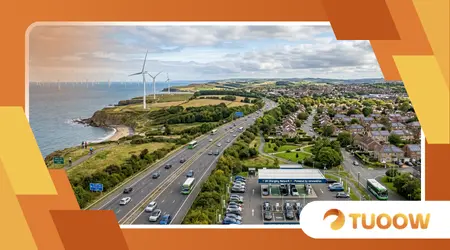
The British landscape is witnessing a profound transformation, from the North Sea’s wind turbines to the surge of electric vehicles in our suburbs.
As we navigate 2026, the UK climate targets 2030 progress stands at a critical juncture.
The nation’s pledge to slash greenhouse gas emissions by 68% compared to 1990 levels is no longer a distant aspiration; it is a legally binding imperative testing our industrial and political resolve.
While early victories like closing coal plants were significant, the remaining path requires deep structural changes to our homes, grids, and industries to ensure a sustainable future.
Strategic Roadmap to 2030
- Policy vs. Practice: Analysing the gap between legislative ambition and real-world implementation.
- Grid Resilience: Addressing the bottlenecks in renewable energy connections.
- The Domestic Challenge: Evaluating the heat pump rollout and national insulation needs.
- Economic Stewardship: The role of green finance in securing the 2030 transition.
The Policy Gap: From Legislative Ambition to Actual Delivery
The United Kingdom has long positioned itself as a global leader in climate legislation.
Being the first major economy to pass net-zero laws, its Nationally Determined Contribution (NDC) for 2030 is among the most demanding in the G7.
However, high-level ambition often collides with the friction of local governance.
When we examine the UK climate targets 2030 progress, we see a tale of two realities: a robust legal framework at Westminster and a complex web of planning hurdles in our local councils.
According to recent assessments by the Climate Change Committee (CCC), the independent body advising GOV.UK, the technical window to meet the 68% reduction remains open but is narrowing.
The primary concern for specialists is the “delivery gap.”
For instance, while offshore wind auctions have regained momentum, the sheer speed required to quadruple capacity by 2030 demands a revolutionary shift in how we approve infrastructure.
We are moving from a phase of “what we want to do” to the far more difficult “how we actually build it” phase.
++ Energy price cap UK April 2026: what households will pay
The Domestic Front: Decarbonising the British Household
Residential heating remains perhaps the most difficult piece of the 2030 puzzle.
Buildings account for approximately 20% of total UK emissions, and our housing stock is among the oldest and least energy-efficient in Europe.
The government’s goal of installing 600,000 heat pumps annually by 2028 is a cornerstone of the UK climate targets 2030 progress.
Yet, the transition from gas boilers to low-carbon alternatives is hindered by high upfront costs and a chronic shortage of certified installers across the country.
The Boiler Upgrade Scheme has seen a welcome increase in grants to £7,500, but for many households, the cost of a full retrofit remains prohibitive.
To achieve the 2030 targets, we must move beyond individual appliance swaps. A street-by-street insulation programme is essential to ensure heat pumps operate efficiently in Victorian terraces.
Expertise suggests that without a national “skills surge” to train the next generation of engineers, the domestic transition will remain a bottleneck rather than a success story.
Electrification and the National Grid Bottleneck
The success of the 2030 goals hinges entirely on the electrification of transport and heat. This means our National Grid must be capable of handling significantly higher loads while remaining entirely green.
Currently, the UK climate targets 2030 progress is being throttled by an outdated connection system. Thousands of renewable energy projects are currently stuck in a “queue” that can last over a decade.
This administrative backlog is arguably the single greatest threat to our mid-term climate obligations.
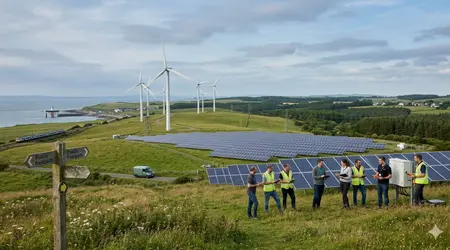
National Grid’s “Great Grid Upgrade” is the most ambitious overhaul of our power infrastructure in generations.
It involves building new pylons and sub-sea cables to transport wind energy from the breezy north to the industrial south.
However, this infrastructure often faces local opposition.
Specialists argue that the government must offer community-tier incentives, such as direct energy bill discounts for those living near new infrastructure, to secure the social licence needed to build at the requisite speed.
Comparative Progress by Key Sector
| Sector | 2030 Objective | Current Status | Primary Barrier |
| Electricity | Decarbonised Grid | High Progress | Grid Connection Delays |
| Transport | 2030 ICE Sale Ban | Moderate Progress | Urban Charging Density |
| Buildings | 600k Heat Pumps/Year | Low Progress | Retrofit Costs & Skills |
| Agriculture | Sustainable Land Use | Early Stages | Subsidy Transition Period |
Transport: Moving Beyond the Petrol Engine
The 2030 deadline for ending the sale of new petrol and diesel cars is a monumental policy shift. In the corporate and fleet sectors, the transition is already well-advanced.
However, when measuring the UK climate targets 2030 progress in the consumer market, challenges remain for those without off-street parking.
Charging infrastructure must become as ubiquitous as the traditional petrol station to maintain public confidence.
This requires a coordinated effort between local authorities and private charging networks to eliminate “charging deserts.”
Furthermore, a critical perspective reveals that simply replacing every petrol car with an electric one is not a total solution.
We must also address total vehicle miles. This involves substantial investment in rail electrification and bus networks, particularly in the North of England.
True decarbonisation involves making public transport and active travel cycling and walking the most convenient and affordable options.
The 2030 target is as much about reimagining urban mobility as it is about changing the fuel source of our private vehicles.
Also read: UK Private Sector Enters 2026 in Downturn: Analysis of Latest CBI Economic Indicators
The Role of Green Finance and the City of London
We cannot achieve the 2030 targets without the “green grease” of capital. The Bank of England has been instrumental in integrating climate risk into financial supervision.
By ensuring that banks and insurers disclose their exposure to carbon-heavy assets, the UK is shifting the entire weight of the City of London toward sustainable investment.
This is a crucial, if often invisible, lever in the UK climate targets 2030 progress. The UK Green Taxonomy provides the necessary clarity to prevent greenwashing and build investor trust.
However, transparency must be matched by rigour. For businesses navigating this transition, the legal and financial landscape is increasingly complex.
Transition plans must be robust and data-driven to withstand the scrutiny of both regulators and the public.
As an expert in this field, I must emphasize that while the financial structures are aligning, the actual deployment of that capital into physical infrastructure like green hydrogen clusters or carbon capture projects must happen with greater urgency to meet the fast-approaching 2030 deadline.
Read more: What the Bank of England’s December Rate Cut Means for the UK Economy in 2026
Nature-Based Solutions: The Silent Carbon Sink
While much of the focus is on wires and turbines, the British countryside holds the key to sequestering the carbon we cannot yet eliminate.
The UK climate targets 2030 progress relies heavily on nature-based solutions, such as peatland restoration and woodland creation.
Farmers are currently transitioning from the old Common Agricultural Policy to the new Environmental Land Management (ELM) schemes.
These new frameworks reward “public goods,” such as biodiversity and carbon storage, effectively turning farmers into guardians of our natural carbon sinks.
This transition is delicate. We must balance the need for carbon sequestration with food security and land for renewable energy.
A sophisticated national land-use strategy is required to avoid pitting these priorities against each other.
By restoring our ancient peat bogs and increasing our canopy cover, we aren’t just hitting targets; we are making the British landscape more resilient to the flooding and heatwaves that are already becoming more frequent as our climate changes.
A Decisive Decade for the United Kingdom
In summary, the UK climate targets 2030 progress reveals a nation that has mastered the art of target-setting but is now grappling with the difficult realities of implementation.
Are the goals still achievable? The answer is a qualified “yes,” but only if we move from a mindset of regulation to one of active construction.
We have the technology, the capital, and the legal mandates; what we now require is the administrative speed to remove the bottlenecks that hinder our progress.
The 2030 targets represent more than just an environmental check-point; they are the blueprint for a modern, self-sufficient, and prosperous Britain.
By reducing our reliance on volatile international fossil fuel markets, we are securing our national interest as much as our environmental legacy.
The path to 2030 is steep, and the time is short, but the rewards cleaner air, lower energy bills, and a leading role in the new global economy are well worth the effort required to get there.
Frequently Asked Questions (FAQ)
1. Is the UK really on track for the 2030 targets?
The UK is a leader in offshore wind but is currently behind in areas like home insulation and industrial emissions.
The goals are achievable, but only with a significant surge in policy action and infrastructure investment over the next four years.
2. Will I be forced to replace my gas boiler by 2030?
There is no law requiring you to remove a working boiler by 2030. However, the government aims to phase out the sale of new gas boilers by 2035.
Between now and then, significant grants are available to help homeowners switch to heat pumps voluntarily.
3. Why is the 2030 target so important compared to the 2050 Net Zero goal?
Climate change is driven by cumulative emissions. The 2030 target acts as a critical “check-point” to ensure we are reducing emissions fast enough to prevent the worst effects of global warming.
Acting now is significantly cheaper than waiting until the 2040s.
4. How does the UK’s progress compare to our European neighbours?
The UK leads in offshore wind and carbon legislation. However, many European neighbours, such as Norway or Germany, are moving faster on EV adoption and heat pump integration.
The UK’s success depends on maintaining its renewable lead while catching up on energy efficiency in buildings.
