
Sadiq Khan car fine: what the City Hall case means for London

The governance of London has always been a complex balancing act between municipal authority, public accountability, and the strict adherence to the rule of law.
Recently, public scrutiny has intensified following discussions surrounding a Sadiq Khan car fine incident that captured media attention across the United Kingdom.
While administrative oversights involving official vehicles can happen to anyone, the involvement of a high-profile political figure transforms a routine penalty charge notice into a significant matter of public interest.
City Hall operations are subject to intense public oversight, and any infraction involving official transport invites rigorous debate regarding transparency, accountability, and the practical application of municipal traffic regulations.
This article examines the details surrounding the Sadiq Khan car fine, analyzing what the City Hall case truly signifies for Londoners, transport policies, and the broader implications of mayoral accountability.
By looking closely at how Transport for London regulations apply to official fleets, we can understand the delicate balance between executive travel requirements and civic responsibilities.
Quick Navigation
- The Background of the City Hall Incident
- Transport Regulations and Official Vehicles in London
- Accountability and Public Perception
- Broader Implications for London Governance
- Frequently Asked Questions
- Conclusion
The Background of the City Hall Incident
When public figures find themselves at the center of administrative penalties, the initial public reaction is often driven by a desire for transparency.
The discussion regarding the Sadiq Khan car fine began when details emerged regarding a specific penalty notice incurred by transport associated with mayoral duties.
In a bustling metropolis like London, where congestion charging, ultra-low emission zones, and strict parking restrictions govern every square mile, navigating official transport logistics is inherently challenging.
City Hall operates a dedicated fleet of vehicles designed to support the Mayor of London in fulfilling a rigorous public schedule across all thirty-two London boroughs.
These vehicles are routinely utilized to attend civic engagements, cross-party meetings, and community consultations.
However, the operational necessity of swift travel does not automatically exempt official transport from statutory traffic enforcement.
The incident in question highlighted the fine line between logistical necessity and compliance with the stringent rules enforced by Transport for London and local borough councils.
Understanding the mechanics of how this penalty arose requires looking at the realities of executive travel in a congested urban environment.
Chauffeur-driven official cars frequently face tight schedules, requiring drivers to navigate sudden diversions, security protocols, and temporary road closures.
Despite these pressures, statutory compliance remains non-negotiable.
The disclosure of the Sadiq Khan car fine served as a reminder that administrative transparency applies equally to the highest offices within local government.
++ UK and Iran Relations: Ed Miliband Issues Warning Over Hostile Activity on British Soil
Transport Regulations and Official Vehicles in London
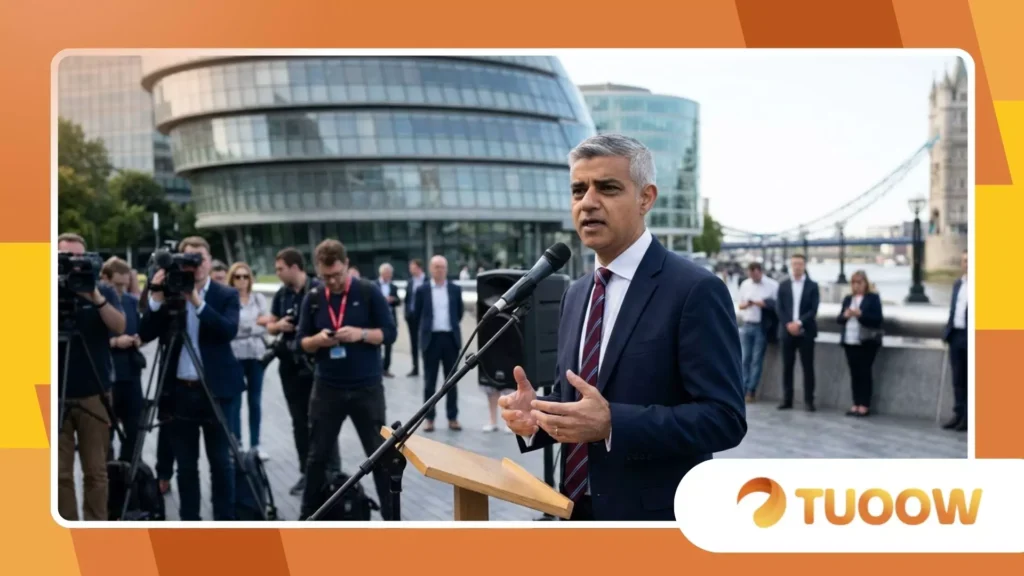
London’s transport ecosystem is among the most heavily regulated in the world.
From the Congestion Charge zone operating in central London to the expanding Ultra Low Emission Zone, motorists face a complex web of rules designed to reduce traffic congestion and improve air quality.
Official mayoral transport is bound by these same legislative frameworks, though specific security and operational exemptions can occasionally apply depending on the nature of the trip and immediate threat assessments managed by the Metropolitan Police Service.
The regulatory framework governing transport enforcement is overseen by statutory bodies and local authorities.
When an official vehicle incurs a penalty charge notice, the standard administrative process involves either prompt payment or a formal representation process if valid mitigating circumstances exist such as immediate security threats or authorized emergency exemptions.
In the case of City Hall transport, standard operating procedures dictate that any incurred fines must be handled with absolute clarity to maintain public trust.
To illustrate how these regulations intersect with municipal operations, consider the following structural comparison of vehicle compliance categories across London:
| Vehicle Category | Governing Body | Primary Regulations | Typical Exemption Status |
| Private Motor Vehicles | TfL / Borough Councils | Congestion Charge, ULEZ, Parking Rules | None (Standard enforcement) |
| Official Mayoral Fleet | City Hall / TfL | Congestion Charge, ULEZ, Parking Rules | Limited operational exemptions for specific security tasks |
| Emergency Services | Metropolitan Police / NHS | Statutory Road Traffic Legislation | Broad statutory exemptions under active duty |
This regulatory matrix highlights why public scrutiny remains high whenever an official vehicle is penalized.
While security protocols dictate certain movements, financial transparency dictates that administrative penalties must be accounted for properly.
Also read: British Economy 2026: Are Families Finally Seeing Relief From Rising Prices?
Accountability and Public Perception
Public perception in British politics is deeply tied to the principle that leaders must lead by example.
When a story breaks regarding administrative oversights in local government, citizens naturally question the internal controls governing public expenditure.
The conversation surrounding the Sadiq Khan car fine tapped directly into these broader sentiments regarding institutional accountability and the stewardship of public funds.
Accountability within City Hall is maintained through regular scrutiny by the London Assembly, Freedom of Information requests, and rigorous journalistic inquiry.
When administrative errors occur, the standard response from public officials typically involves acknowledging the oversight, settling any financial penalties from appropriate private or authorized operational budgets, and reviewing internal scheduling protocols to prevent recurrence.
This mechanism ensures that minor infractions do not spiral into systemic governance crises, while still acknowledging accountability to the electorate.
Moreover, the psychological impact of such incidents on public trust should not be underestimated. Londoners expect their civic leaders to navigate the same everyday administrative challenges that ordinary motorists face.
When official vehicles are seen receiving penalty notices, it humanizes the administrative apparatus of local government while simultaneously testing public patience regarding administrative efficiency.
The ability of the mayoral office to address these matters openly determines how quickly public concern subsides.
Read more: Why narrative DLCs are now premium experiences
Broader Implications for London Governance
Looking beyond the immediate headlines, the City Hall case offers valuable lessons for the future of municipal administration in the capital.
As London continues to implement ambitious environmental policies such as expanding clean air zones and prioritizing active travel the internal operations of local government must align seamlessly with the rules imposed on the general public.
Governance in London relies heavily on the moral authority of its leaders.
If policies designed to discourage unnecessary driving or penalize non-compliance are to maintain widespread public backing, the administrative bodies enforcing those rules must demonstrate flawless compliance.
Any perceived disconnect between the rules applied to ordinary citizens and those applied to official fleets can weaken public support for crucial urban planning initiatives.
Furthermore, transport logistics for city leaders are bound to evolve.
With increasing digitization of traffic enforcement through automated ANPR cameras and smart borough sensors, human error in scheduling or route planning is caught faster than ever before.
City Hall administrators must leverage advanced fleet management technologies to ensure that official journeys comply seamlessly with London’s complex regulatory map, safeguarding both the mayor’s time and the integrity of municipal administration.
Conclusion
The discussion surrounding administrative penalties involving municipal transport serves as a vital barometer for public accountability in the British capital.
While individual infractions may appear minor in the grand scheme of metropolitan governance, they highlight the enduring importance of transparency, rigorous administrative control, and adherence to the rule of law.
As London continues to navigate complex urban mobility challenges, the commitment of City Hall to exemplary compliance remains paramount in maintaining the trust of millions of residents.
Frequently Asked Questions
What caused the penalty notice involving the mayoral vehicle?
The penalty typically arises from standard traffic enforcement measures, such as parking restrictions, bus lane infractions, or zone compliance, encountered during routine official travel across London.
Are official mayoral cars exempt from London congestion and emission charges?
While certain security-related journeys managed alongside police protection may qualify for specific operational exemptions, standard administrative travel is generally subject to the same regulatory oversight as commercial or private fleets.
Who pays for penalty notices incurred by official City Hall transport?
Depending on the specific circumstances of the infraction and internal organizational policies, administrative penalties are reviewed to determine whether they stem from unavoidable operational necessity or scheduling errors.
How does City Hall ensure transparency regarding administrative expenses?
City Hall operates under strict public accountability guidelines, responding to London Assembly questioning and Freedom of Information requests regarding official expenditures and transport logistics.
